Was Jack The Ripper Hanged in Dundee?

Jack the Ripper

Everyone has heard of Jack the Ripper the question we are asking is?. Did one of history’s most infamous serial killers meet his end on a Scottish scaffold? The last time a “Death by Hanging” sentence was carried out in Dundee was on April 24th, 1889. The man executed was William Henry Bury, a sawdust merchant from East London who had arrived in the city on January 21st, 1889, alongside his new wife, Ellen.

They had travelled to Dundee on the London Packet Steamer Cambria. Neither had any prior connection with the region, leading local historians to speculate that the sudden journey was a desperate flight from London authority—and perhaps from the grisly scenes of Whitechapel where Jack the Ripper had committed the heinous crimes.

The Tragic Events at Princes Street

Upon arrival, the couple first found accommodation at 43 Union Street, Dundee. After a week, they moved to a two-room basement flat at 113 Princes Street. It was in this home just a few days later that Ellen met her tragic fate.

On Sunday, February 10th, 1889, Bury walked into the Police Headquarters on Bell Street, Dundee, and spoke to Lieutenant James Parr. He volunteered a bizarre story: he claimed he had awakened to find his wife dead on the floor with a rope tied tightly around her neck.

Was William Henry Bury Really Jack the Ripper?

When officers searched the Princes Street residence, they discovered Ellen’s body stuffed inside a trunk, bearing severe injuries remarkably similar to the Whitechapel victims in London.

The timing of Bury’s departure from London coincided almost exactly with the sudden end of the Jack the Ripper murders in late 1888. During his trial and subsequent imprisonment at Dundee Royal Infirmary and Dundee Jail, local authorities and London detectives actively investigated whether they had finally unmasked Jack the Ripper in Dundee. Though Bury maintained his innocence regarding the London crimes up to his execution, the striking similarities in methodology continue to fuel historical debate today.

On Sunday, 10th February Bury walked into Police Headquarters in Bell Street, Dundee and spoke to Lieutenant James Parr.

He volunteered a story to the effect that he had awakened to find his wife dead on the floor with a rope round her neck. He went on to say he was frightened that he would be apprehended as the infamous “Jack the Ripper” and he then proceeded to pack her body in a box.

Police Officers rushed to the Princes Street house and found the strangled body of Ellen Bury in a square shaped box which measured approximately 3 feet long by 3 feet deep.

A frenzied attack had taken place upon her body with a knife which lay nearby. It still had some flesh and blood adhering to it.

It later transpired that Bury had lived with the box and its contents for several days after the murder and that he and other male friends had played cards upon it.

His conscience eventually got the better of him and that was when he reported the matter to police.

It later came out in evidence at his trial that prior to this confession he had gone for a walk with a male friend and drinking partner and “Jack the Ripper” had been mentioned on several occasions.

Before moving to Dundee Bury had lived close to Whitechapel where Jack the Ripper carried out the infamous murders.

His wife, Ellen, had been slashed with an open blade similar to that implement used by the Ripper.

In 1995, an author, William Beadle, announced that William Bury was the infamous “Jack the Ripper” in his book of that name.

Scotland Yard had been called in by Dundee Police to investigate William Bury’s London connections.

One of the investigating English officers made a report that Bury had murdered Ellen in a drunken frenzy.

As a result of this report Scotland Yard never suspected Bury of being Jack the Ripper.

They believed the Dundee murder was a one off killing. The theory being that Bury had only married his wife for her money.

The trial of William Henry Bury commenced on 28th., March, 1889 at the Spring Sitting of the High Court in Dundee Sheriff Court before His Lordship, Lord Young.

Bury, who had pled not guilty, was found guilty after trial. The jury returned their guilty verdict with the words ” We find the prisoner guilty, but strongly recommend him to mercy”.

Lord Young seemed to be staggered by their recommendation.

“May I ask”, he inquired. “On what grounds you recommend the prisoner to mercy”.

It was explained to the Court that the jury viewed the medical evidence as conflicting.

Lord Young refused to accept such a verdict and instructed the jury to retire once more.

They very soon returned with a unanimous verdict of guilty, with no recommendation.

Lord Young then pronounced a sentence of death by hanging.

An Appeal was later dismissed and the scene was set for the execution.

The scaffold was made specially for Bury and was held beneath the Court Building for many years after. It is now in Dundee Museum.

On 24th., April 1889, the morning of the execution, Bury had a breakfast of bread and butter, poached eggs and tea.

The magistrates then entered his cell, identified the convict, who afterwards thanked all present for their kindness.

On his walk to the scaffold he is described as being ” calm and collected “.

The scaffold had been set up as close as possible to the condemned cell. The walls and roof were of plain deal boards and the windows in the roof of the structure admitted what light there was in the chamber. The wooden rail round the pit was draped in black as was the overhead beam. This was to stop prying eyes from the upper windows of a Jute Mill opposite the prison yard.

When about 12 yards from the scaffold the white cap was pulled over Bury’s face and he walked unfalteringly onto the platform.

Just as the death service was concluded by the Clergy the hangman, Berry, stepped aside and touched the lever. The drop fell and Bury quickly disappeared, death being instantaneous.

Weighing 9 stone 10 pounds and being 5 feet 3 inches in height, Bury got a drop of 6 1/2 feet.

He was buried within the Dundee Prison yard (now demolished) and his execution site was marked by a stone in the wall on which was inscribed WHB 1889.

That was the last time in Dundee that the black flag had been hoisted above the Court building to announce the carrying out of the death sentence.

In actual fact the pulley on the flag pole had been so little used that the flag hoisters had great difficulty in raising the flag. The pulley kept jamming.

There were no more murders by Jack the Ripper after Bury was executed!

Republished with kind permission of retired policeman Scott Wilson. Visit his website at http://www.sol.co.uk/s/scott.wilson for further articles and a great selection of photographs featuring Old Dundee.

The image of Jack the Ripper is an artistic interpretation of of the suspect
Bonnie Dundee: 3 Dark Mysteries of His Dramatic Final Hours

Bonnie Dundee

JJohn Graham of Claverhouse—or “Bonnie Dundee,” as his popular nickname states—remains one of Scotland’s most enigmatic and mythologized figures. A steadfast Royalist and devoted adherent to the exiled House of Stuart, Graham led the Jacobite forces in the Rising of 1689, meeting his end at the Battle of Killiecrankie on July 27th of that year.

To understand his deep connection to Tayside, one must look closely at his ties to Dundee itself. Claverhouse held the post of Constable of Dundee and spent considerable time residing at Dudhope Castle. His local ties also extended to nearby Claypotts Castle, making the local landscape an integral backdrop to his rise as a formidable military commander.

The Nightmare of Bonnie Dundee

Legend says that on the eve of Killiecrankie, Claverhouse was plagued by a terrifying nightmare. In his vision, he saw a bloodied body lying upon a bed, its head severely wounded. The ghost pointed a finger at him and cried out, “Remember Brown of Priesthill!”

John Brown was a committed Covenanter executed in 1685 for his faith—a death in which Claverhouse had famously played a direct role. According to the tale, the nightmare deeply unsettled Claverhouse, causing him to hesitate on the morning of the battle. Despite his forebodings, tactical pressure forced him to order the attack. As the Highland charge began to break the government lines, Claverhouse regained his composure and rode out to lead the cavalry.

The Death of Bonnie Dundee

His triumph was brief. Claverhouse was struck in the torso by musket shot—folklore long claiming it was a silver bullet—and died on the field at the age of 41. He was carried from the battlefield wrapped in tartan and buried at St Bride’s Kirk in Blair Atholl.

Today, visitors can explore the battleground preserved by the National Trust for Scotland, where local lore still claims that a ghostly red glow marks the Pass of Killiecrankie on the anniversary of his fall.

A Rally on the Law

Centuries later, the story of Bonnie Dundee continues to resonate across Angus and Tayside. On Saturday, 10th April 2004, members of Na Fir Dileas and the White Cockade Society gathered in Dundee to mark his memory with a ceremonial raising of the Jacobite Standard.

Assembling at Dudhope Castle, marchers in Highland dress escorted the banner up to the top of Dundee Law—the “Tap o’ the Law.” Historian David Ross addressed the gathering, emphasizing the pivotal role Dundee played in the opening chapter of the 1689 rising. It was on 13th April 1689 that Claverhouse famously raised the Royal Standard on Dundee Law, defying the Parliament in Edinburgh and effectively launching the first Jacobite campaign.

Author Andrew Murray-Scott also reflected on Claverhouse’s complex legacy during the event, reminding those present that while the wider Jacobite cause ultimately ended in defeat at Culloden in 1746, the local story of 1689 remains a compelling chapter in Dundee’s heritage.

When the Standard was unfurled near the Law’s monument, a piper struck up a traditional lament that echoed over the city below. The event served as a solemn modern tribute to a figure whose name remains firmly etched into the landscape of local history.

The Historical Legacy in Modern Dundee

Whether viewed as “Bluidy Clavers” by Covenanter sympathisers or as the heroic “Bonnie Dundee” by Jacobite loyalists, John Graham of Claverhouse left an indelible mark on the region. His former residence at Dudhope Castle stands today as a tangible reminder of the late 17th century, anchoring Dundee right at the centre of Scotland’s national story.

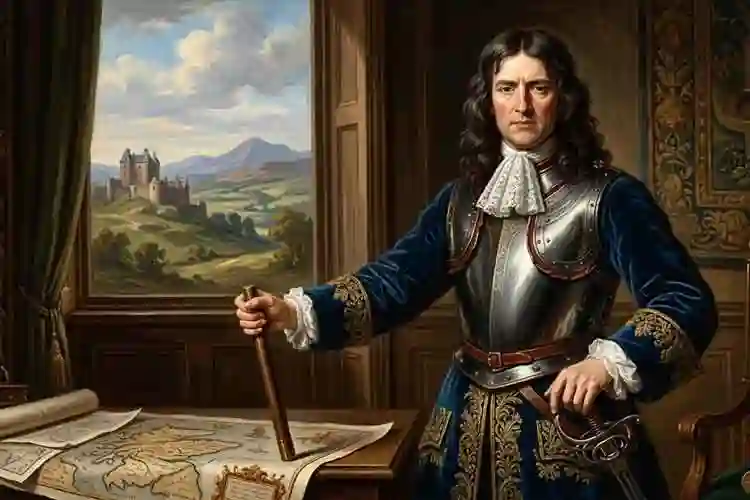
The Image is an artistic interpretation of Bonnie Dundee

Dundee Drone Show Plans Unveiled for Christmas 2026

drone show

Dundee is set to light up the skies this Christmas with a spectacular new drone show that could transform the city centre into a breathtaking winter wonderland. If the proposed drone show goes ahead, it will add an entirely new dimension to the festive season — creating one of the most visually ambitious Christmas events Dundee has hosted in years.

Further details about the full programme, performers, and confirmed attractions are expected to be announced closer to the event date. Organisers are working hard to finalise timings and locations so residents and visitors can plan ahead.

For now, Dundee residents can look forward to a day combining familiar festive favourites with the possibility of a spectacular new Christmas attraction right above the city. This innovative drone show promises to be a highlight — offering a modern, eco‑friendly alternative to traditional fireworks and suitable for all ages to enjoy.

Boost for Dundee City Centre

The expanded festive programme is expected to bring increased numbers of visitors into Dundee city centre during one of the busiest periods of the year. The combination of sporting events, family entertainment, Christmas shopping, and evening celebrations could encourage visitors to spend more time — and more — in the city centre, benefiting local shops, cafés, restaurants, and traders taking part in the festive market.

“This drone display will put Dundee on the map this Christmas. It’s not just a show — it’s a massive boost for local business and community spirit.” — Justin Thyme

Organisers will release full details including dates, times, and viewing locations as soon as plans are confirmed. This Dundee Christmas drone display forms part of a wider programme designed to draw crowds back to the city centre and support local trade throughout the festive period.

Whether you’re coming for the markets, the entertainment, or the stunning drone show lighting up the sky — this year’s celebrations promise something special for everyone.

Dundee Drone Show Could Light Up the Skyline

The proposed Dundee drone show would bring a new dimension to the city’s traditional Christmas celebrations. If plans go ahead, an illuminated fleet of drones could create spectacular patterns and images above the city centre, providing a dramatic visual centrepiece for visitors gathering for the festive switch-on.

The celebrations are expected to include:

  • A curated Christmas Market featuring local traders and craft stalls
  • Family-friendly funfair rides and attractions
  • A selection of food and drink stalls
  • Live entertainment from street performers and musical acts

Proposed drone show could light up Dundee’s skyline

The most ambitious addition to the 2026 programme is a proposed festive drone light show.

Dundee City Council has put the project out to tender, raising the possibility of hundreds of illuminated drones taking to the skies above the city as part of the Christmas celebrations.

If the procurement process is successful, the display could provide a dramatic aerial centrepiece for the day’s festivities and offer a new visual attraction for visitors.

Drone light shows have become increasingly popular at major events in recent years, using carefully programmed fleets of illuminated drones to create changing patterns, shapes and images in the night sky.

For Dundee, the proposed display would represent a significant addition to the traditional Christmas switch-on celebrations.

A full day of festive entertainment

The celebrations are expected to build throughout the day, with the city centre becoming increasingly busy as families, shoppers and visitors gather for the afternoon and evening programme.

The combination of the Santa Dash, Christmas market, entertainment and family attractions is designed to create a full day of activity rather than simply focusing on the traditional evening lights switch-on.

Local traders and food vendors are also expected to benefit from the increased footfall, while the event could provide an important boost for the city centre during the busy festive shopping period.

Christmas lights switch-on planned for the evening

The day’s celebrations will culminate at 6pm, when Dundee’s seasonal lights are scheduled to be switched on.

The evening event will provide the traditional centrepiece of the city’s Christmas celebrations, with festive lighting transforming the city centre as darkness falls.

If the proposed drone display goes ahead, it could add an entirely new dimension to the occasion and create one of the most visually ambitious Christmas events Dundee has hosted.

Further details about the final programme, performers and confirmed attractions are expected to be announced closer to the event.

For now, Dundee residents can look forward to a day combining familiar festive favourites with the possibility of a spectacular new Christmas attraction in the skies above the city.

Boost for Dundee City Centre

The expanded programme is expected to bring increased numbers of visitors into Dundee city centre during one of the busiest periods of the year.

The combination of sporting events, family entertainment, Christmas shopping and evening celebrations could encourage visitors to spend more time in the city, benefiting local shops, cafés, restaurants and traders taking part in the festive market.

Organisers are expected to release further information about the final programme closer to the event, including confirmation of attractions, entertainment and arrangements for the proposed drone display.

See official updates on the Dundee City Council events page once confirmed.


BATTLE LINES DRAWN OVER KINGSWAY CARE CENTRE FUTURE

Kingsway Care Centre

Controversial proposals regarding the future of Kingsway Care Centre have sparked widespread concern among local families, community groups, and political representatives across the city.

The facility on Kings Cross Road serves as the primary hub for old-age mental health assessment in Dundee, housing dedicated inpatient units—including Wards 1, 3, and 4—alongside integrated community mental health teams. Under review by NHS Tayside and the Dundee Health and Social Care Partnership (HSCP), strategic options currently being explored involve a major restructuring of local inpatient bed capacity in favor of centralized regional care models and expanded community outreach.

Strategic Realignment vs. Local Needs

Health administrators argue that the proposed changes reflect national health strategies aimed at reducing prolonged hospital stays for elderly patients. The shift emphasizes delivering assessment, rehabilitation, and long-term support for conditions such as dementia and late-life depression directly within patients’ homes or through community-led care teams.

Operational constraints have also placed pressure on the site itself. Because the Kingsway facility is leased rather than owned outright by NHS Tayside, upgrading the existing infrastructure to meet evolving safety, anti-ligature, and modern clinical standards presents ongoing logistical challenges.

However, critics warn that reducing local inpatient capacity risks removing a vital safety net for the city’s most vulnerable residents. Proposals that could see beds consolidated at regional facilities—such as Murray Royal Hospital in Perth or Stracathro Hospital near Brechin—have met sharp pushback over the potential burden placed on Dundee families.

Transport and Carer Concerns Over Kingsway Care Centre Changes

Local campaigners and dementia support networks point out that centralizing specialist beds outside the city poses significant travel hurdles for elderly spouses, carers, and relatives, many of whom rely entirely on public transport.

There are also growing concerns over the potential fragmentation of local services. Kingsway Care Centre currently allows community nurses, social workers, and clinical consultants to collaborate under one roof. Community advocates warn that unbundling this centralized model could make navigating late-stage mental health care even more complex for affected households.

Public health projections show a steady rise in dementia diagnoses across Scotland over the coming decade. Opponents of the proposals stress that Dundee—given its distinct demographic and health profile—requires expanded local investment rather than a reduction in dedicated inpatient resources.

What Happens Next for Kingsway Care Centre?

No final decisions have been implemented, and public consultation processes remain ongoing as community groups, healthcare workers, and local politicians continue to lobby the Integration Joint Board and NHS Tayside leadership to safeguard Dundee’s local bed provision.

The Dundee Messenger will continue to follow this story as further updates and formal feedback from the Health and Social Care Partnership emerge.