Was Jack The Ripper Hanged in Dundee?

Jack the Ripper

Everyone has heard of Jack the Ripper the question we are asking is?. Did one of history’s most infamous serial killers meet his end on a Scottish scaffold? The last time a “Death by Hanging” sentence was carried out in Dundee was on April 24th, 1889. The man executed was William Henry Bury, a sawdust merchant from East London who had arrived in the city on January 21st, 1889, alongside his new wife, Ellen.

They had travelled to Dundee on the London Packet Steamer Cambria. Neither had any prior connection with the region, leading local historians to speculate that the sudden journey was a desperate flight from London authority—and perhaps from the grisly scenes of Whitechapel where Jack the Ripper had committed the heinous crimes.

The Tragic Events at Princes Street

Upon arrival, the couple first found accommodation at 43 Union Street, Dundee. After a week, they moved to a two-room basement flat at 113 Princes Street. It was in this home just a few days later that Ellen met her tragic fate.

On Sunday, February 10th, 1889, Bury walked into the Police Headquarters on Bell Street, Dundee, and spoke to Lieutenant James Parr. He volunteered a bizarre story: he claimed he had awakened to find his wife dead on the floor with a rope tied tightly around her neck.

Was William Henry Bury Really Jack the Ripper?

When officers searched the Princes Street residence, they discovered Ellen’s body stuffed inside a trunk, bearing severe injuries remarkably similar to the Whitechapel victims in London.

The timing of Bury’s departure from London coincided almost exactly with the sudden end of the Jack the Ripper murders in late 1888. During his trial and subsequent imprisonment at Dundee Royal Infirmary and Dundee Jail, local authorities and London detectives actively investigated whether they had finally unmasked Jack the Ripper in Dundee. Though Bury maintained his innocence regarding the London crimes up to his execution, the striking similarities in methodology continue to fuel historical debate today.

On Sunday, 10th February Bury walked into Police Headquarters in Bell Street, Dundee and spoke to Lieutenant James Parr.

He volunteered a story to the effect that he had awakened to find his wife dead on the floor with a rope round her neck. He went on to say he was frightened that he would be apprehended as the infamous “Jack the Ripper” and he then proceeded to pack her body in a box.

Police Officers rushed to the Princes Street house and found the strangled body of Ellen Bury in a square shaped box which measured approximately 3 feet long by 3 feet deep.

A frenzied attack had taken place upon her body with a knife which lay nearby. It still had some flesh and blood adhering to it.

It later transpired that Bury had lived with the box and its contents for several days after the murder and that he and other male friends had played cards upon it.

His conscience eventually got the better of him and that was when he reported the matter to police.

It later came out in evidence at his trial that prior to this confession he had gone for a walk with a male friend and drinking partner and “Jack the Ripper” had been mentioned on several occasions.

Before moving to Dundee Bury had lived close to Whitechapel where Jack the Ripper carried out the infamous murders.

His wife, Ellen, had been slashed with an open blade similar to that implement used by the Ripper.

In 1995, an author, William Beadle, announced that William Bury was the infamous “Jack the Ripper” in his book of that name.

Scotland Yard had been called in by Dundee Police to investigate William Bury’s London connections.

One of the investigating English officers made a report that Bury had murdered Ellen in a drunken frenzy.

As a result of this report Scotland Yard never suspected Bury of being Jack the Ripper.

They believed the Dundee murder was a one off killing. The theory being that Bury had only married his wife for her money.

The trial of William Henry Bury commenced on 28th., March, 1889 at the Spring Sitting of the High Court in Dundee Sheriff Court before His Lordship, Lord Young.

Bury, who had pled not guilty, was found guilty after trial. The jury returned their guilty verdict with the words ” We find the prisoner guilty, but strongly recommend him to mercy”.

Lord Young seemed to be staggered by their recommendation.

“May I ask”, he inquired. “On what grounds you recommend the prisoner to mercy”.

It was explained to the Court that the jury viewed the medical evidence as conflicting.

Lord Young refused to accept such a verdict and instructed the jury to retire once more.

They very soon returned with a unanimous verdict of guilty, with no recommendation.

Lord Young then pronounced a sentence of death by hanging.

An Appeal was later dismissed and the scene was set for the execution.

The scaffold was made specially for Bury and was held beneath the Court Building for many years after. It is now in Dundee Museum.

On 24th., April 1889, the morning of the execution, Bury had a breakfast of bread and butter, poached eggs and tea.

The magistrates then entered his cell, identified the convict, who afterwards thanked all present for their kindness.

On his walk to the scaffold he is described as being ” calm and collected “.

The scaffold had been set up as close as possible to the condemned cell. The walls and roof were of plain deal boards and the windows in the roof of the structure admitted what light there was in the chamber. The wooden rail round the pit was draped in black as was the overhead beam. This was to stop prying eyes from the upper windows of a Jute Mill opposite the prison yard.

When about 12 yards from the scaffold the white cap was pulled over Bury’s face and he walked unfalteringly onto the platform.

Just as the death service was concluded by the Clergy the hangman, Berry, stepped aside and touched the lever. The drop fell and Bury quickly disappeared, death being instantaneous.

Weighing 9 stone 10 pounds and being 5 feet 3 inches in height, Bury got a drop of 6 1/2 feet.

He was buried within the Dundee Prison yard (now demolished) and his execution site was marked by a stone in the wall on which was inscribed WHB 1889.

That was the last time in Dundee that the black flag had been hoisted above the Court building to announce the carrying out of the death sentence.

In actual fact the pulley on the flag pole had been so little used that the flag hoisters had great difficulty in raising the flag. The pulley kept jamming.

There were no more murders by Jack the Ripper after Bury was executed!

Republished with kind permission of retired policeman Scott Wilson. Visit his website at http://www.sol.co.uk/s/scott.wilson for further articles and a great selection of photographs featuring Old Dundee.

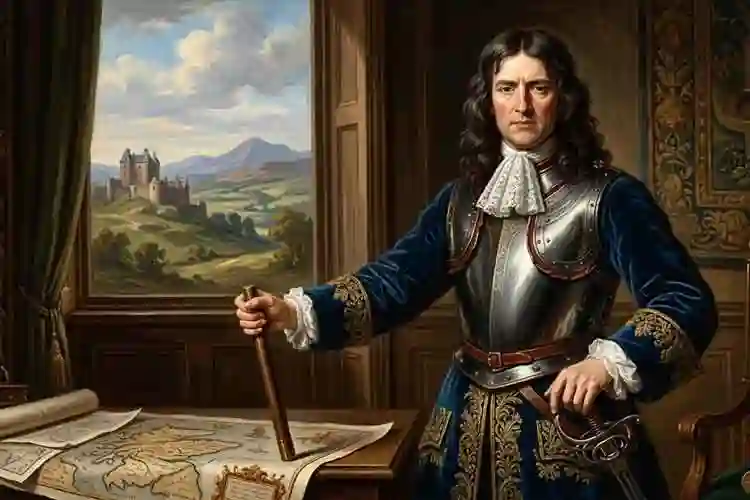
The image of Jack the Ripper is an artistic interpretation of of the suspect
Bonnie Dundee: 3 Dark Mysteries of His Dramatic Final Hours

Bonnie Dundee

JJohn Graham of Claverhouse—or “Bonnie Dundee,” as his popular nickname states—remains one of Scotland’s most enigmatic and mythologized figures. A steadfast Royalist and devoted adherent to the exiled House of Stuart, Graham led the Jacobite forces in the Rising of 1689, meeting his end at the Battle of Killiecrankie on July 27th of that year.

To understand his deep connection to Tayside, one must look closely at his ties to Dundee itself. Claverhouse held the post of Constable of Dundee and spent considerable time residing at Dudhope Castle. His local ties also extended to nearby Claypotts Castle, making the local landscape an integral backdrop to his rise as a formidable military commander.

The Nightmare of Bonnie Dundee

Legend says that on the eve of Killiecrankie, Claverhouse was plagued by a terrifying nightmare. In his vision, he saw a bloodied body lying upon a bed, its head severely wounded. The ghost pointed a finger at him and cried out, “Remember Brown of Priesthill!”

John Brown was a committed Covenanter executed in 1685 for his faith—a death in which Claverhouse had famously played a direct role. According to the tale, the nightmare deeply unsettled Claverhouse, causing him to hesitate on the morning of the battle. Despite his forebodings, tactical pressure forced him to order the attack. As the Highland charge began to break the government lines, Claverhouse regained his composure and rode out to lead the cavalry.

The Death of Bonnie Dundee

His triumph was brief. Claverhouse was struck in the torso by musket shot—folklore long claiming it was a silver bullet—and died on the field at the age of 41. He was carried from the battlefield wrapped in tartan and buried at St Bride’s Kirk in Blair Atholl.

Today, visitors can explore the battleground preserved by the National Trust for Scotland, where local lore still claims that a ghostly red glow marks the Pass of Killiecrankie on the anniversary of his fall.

A Rally on the Law

Centuries later, the story of Bonnie Dundee continues to resonate across Angus and Tayside. On Saturday, 10th April 2004, members of Na Fir Dileas and the White Cockade Society gathered in Dundee to mark his memory with a ceremonial raising of the Jacobite Standard.

Assembling at Dudhope Castle, marchers in Highland dress escorted the banner up to the top of Dundee Law—the “Tap o’ the Law.” Historian David Ross addressed the gathering, emphasizing the pivotal role Dundee played in the opening chapter of the 1689 rising. It was on 13th April 1689 that Claverhouse famously raised the Royal Standard on Dundee Law, defying the Parliament in Edinburgh and effectively launching the first Jacobite campaign.

Author Andrew Murray-Scott also reflected on Claverhouse’s complex legacy during the event, reminding those present that while the wider Jacobite cause ultimately ended in defeat at Culloden in 1746, the local story of 1689 remains a compelling chapter in Dundee’s heritage.

When the Standard was unfurled near the Law’s monument, a piper struck up a traditional lament that echoed over the city below. The event served as a solemn modern tribute to a figure whose name remains firmly etched into the landscape of local history.

The Historical Legacy in Modern Dundee

Whether viewed as “Bluidy Clavers” by Covenanter sympathisers or as the heroic “Bonnie Dundee” by Jacobite loyalists, John Graham of Claverhouse left an indelible mark on the region. His former residence at Dudhope Castle stands today as a tangible reminder of the late 17th century, anchoring Dundee right at the centre of Scotland’s national story.

The Image is an artistic interpretation of Bonnie Dundee

Is Marion Ogilvy-The Ghost of Claypotts Castle?

Dundee local history Claypotts Castle

Marion Ogilvy is believed by many to be the white lady of Claypotts Castle, Each year on May 29th a ghostly figure appears in an upstairs window waving a white handkerchief, her spirit said to haunt its corridors. The identity of this phantasm is most widely believed to be that of Marion Ogilvy, a Renaissance aristocrat whose life was as much marred by scandal as it was by tragedy.

Who was Marion Ogilvy?

Marion Ogilvy was born to the powerful Ogilvy family of Angus in the early 1500s, daughter of James Ogilvy of Airlie. Although nothing is known of her childhood, she grew up to be a clever, independent, and more significantly, influential woman. Her name is most famously linked with Cardinal David Beaton, the last Scottish cardinal before the Reformation and a key player in Scotland’s violent religious history.

Marion was Beaton’s long-term mistress – an open secret at the time, and a relationship that caused considerable controversy within the Catholic Church. Though priests were expected to remain celibate, Beaton and Ogilvy lived together in something resembling a marriage for over two decades. They had at least eight children, and Marion managed estates on his behalf, including Ethie Castle near Arbroath. She was anything but a shadowy consort but an influential woman in her own right, ruling over lands, households, and finances with considerable power.

However, despite her public role and closeness to Beaton, tragedy dogged her life. Cardinal Beaton was assassinated in 1546, during the Protestant rebellion, murdered in his stronghold of St Andrews Castle. Marion’s power waned following his death, and she is thought to have retired from public life, possibly finding refuge at Claypotts Castle, although historical documentation of her personal connection to the building is scarce.

A ghostly Tale

What has survived longer in living colour than documented fact is the ghost story – the tale of The White Lady. The tale goes that the apparition of a woman dressed in white has been seen haunting the grounds of Claypotts Castle for centuries, most notably at twilight. She appears to be dressed in a long white gown, her face pale and sorrowful, most frequently appearing in the windows or gliding soundlessly through the gardens. There are some reports that she waits for a lost love to return, and others that she’s trapped between worlds because she’s led a life of forbidden love and clerical shame.

Why is Marion Ogilvy associated with this spectral presence? Maybe it’s the romanticised version of her life – an aristocrat whose passionate romance with a cardinal defied church law, who bore children out of wedlock, and who saw her lover die in appalling brutality. These are the perfect ingredients for a haunting. Marion, torn between power and ignominy, is a timeless tragic figure – one whose spirit, some believe, cannot rest.

Claypotts Castle

Claypotts Castle, now under the guardianship of Historic Environment Scotland, is little altered by the ravages of time. Its luminous corbelled turrets and crow-stepped gables are a joy for architectural historians, but for the majority of visitors, it’s the ghost story that lingers longest in the mind. The castle remains closed to the public, but still draws the occasional local legend and magnetizes those attracted to Scotland’s haunted heritage.

Believe in ghosts or not, the legend of The White Lady adds a chilling human dimension to Claypotts Castle’s otherwise bare stones. It encourages us to consider the emotional weight of history – not so much the dates and the events, but the passions, the sorrows, and the loose ends that echo down the centuries. Marion Ogilvy may never have been an actual resident of Claypotts, but in the Scottish imagination, she walks its halls still.

The Tay Bridge Disaster: A tragedy that shook Victorian Britain

Tay Bridge Disaster

The Tay Bridge Disaster on the night of December 28, 1879, is one of the greatest engineering disasters of the 19th century claiming the lives of all 75 people aboard a train crossing the River Tay, it left a profound impact on the nation and changed the future of bridge design forever.

The Tay bridge was a marvel of its time. Sir Thomas Bouch designed the original Tay Bridge, a two-mile-long cast iron bridge between the city of Dundee and Wormit in Fife. Queen Victoria herself opened it in 1878 and it was a marvel of Victorian engineering. It cut hours from journeys to the north of Scotland and was a symbol of progress, ambition, and ingenuity.

The Tay Bridge Disaster

But beneath appearances, all was not well that it ought to have been. From the beginning, engineers whispered among themselves rumours of potential flaws in the design of the bridge. Bouch had built the bridge with lighter girders to minimize weight and cost. While this saved the structure money, it also made it vulnerable to wind. The lattice-girder structure of the bridge, combined with the circumstance that key components were constructed of cast iron, would eventually prove to be disastrous.

There was a violent storm raging over Scotland’s east coast on the fateful evening. Wind speed was forecast to reach a level of around 70 mph. The North British Railway train from Dundee to Burntisland departed at around 7:15 p.m. on its travel over the Tay Bridge. By the time it moved beyond the middle sections, witnesses claimed to have seen bursts of light and to have heard a tremendous crash. The bridge had collapsed under the train, and the entire structure, crew, and passengers had plunged into the icy, swirling waters below.

Rescue attempts hindered by bad weather

Rescue operations were hindered by the ferocity of the weather and darkness. In the subsequent days, bodies and mangled wreckage were retrieved from the river by searchers. Shock among the public soon gave way to outrage. An official Court of Inquiry was instituted early in 1880 and became the subject of intense media coverage and examination.

Findings of the Enquiry

The inquiry revealed a number of fundamental flaws. Most damning of all, however, it disclosed that the bridge had not been fully wind tested. Sir Thomas Bouch had not considered the lateral forces of wind on a train and a bridge simultaneously. The piers, which were constructed with cast iron columns, had also been poorly maintained. There were rusty and missing bolts, and the metal showed signs of brittle failure. The use of cast iron, which was compressive in strength but weak in tension and shock, contributed to the catastrophic failure.

The findings destroyed Bouch’s reputation. Having been knighted once for his success, he was now vilified by the media and his professional peers. He died less than a year later, his health in ruins and reputation destroyed.

The catastrophe initiated massive reforms in the standards of engineering. The engineers realized the importance of testing material and wind loading. Cast iron, being a popular material in large building construction, was subsequently replaced by wrought iron and finally steel. The catastrophe also emphasized the need for strict inspection and maintenance techniques.

The modern Tay bridge

A replacement Tay Bridge was ordered after the tragedy. The new bridge, opened in 1887, was built a little below from the original site and was designed more conservatively and robustly. It remains operational to this day, a testament to the lessons of the disaster.

The psychological impact of the Tay Bridge Disaster was immense. Families lost loved ones, and communities were torn apart. The disaster gained entry into the public’s consciousness through journalism, poetry, and popular culture. The most infamous reaction was perhaps that of William McGonagall, Scotland’s worst poet, whose awkward, sentimental poem, “The Tay Bridge Disaster”, summed up the mood of the public—though not always as he might have wished.

More than 140 years later, the Tay Bridge Disaster remains a powerful reminder of the things that can go wrong with design and human error. It is a moment in history, not just of a terrible accident, but of a revolution in how we think about engineering, safety, and the responsibility of those who design the buildings we entrust with our lives.

Today, remains of the old bridge still loom over the Tay’s waters—a haunting reminder of the dead and a grim testament to a catastrophe that reshaped an industry.

Image by joesoap1952 from Pixabay

1841: Church Fire in the Heart of the City

Church Fire

At the crack of dawn on a cold January morning in 1841, disaster struck when a devastating church fire swept through a crowded church service, leaving a lasting and poignant mark on the collective memory of the city. Now remembered as the Dundee Church Fire, the disaster is one of the worst peacetime tragedies of the city during the 19th century.

A Day of Devotion Turns to Disaster

It was during an evening service, and the chapel was packed to the very rafters, with others in the galleries above. The church was filled with a high proportion of women and children who were prepared to listen to the evening sermon.

Shortly after the service commenced, it is believed that a gas light in the upper gallery malfunctioned. Descriptions have the flame burst into life, likely due to overpressure or careless maintenance of the new gas installation. Within seconds, the fire engulfed the wood fittings and galleries and blazed up through the upper sections of the church in a terrible conflagration.

Panic and Chaos as church fire rages

As flames engulfed the area, panic broke out. The densely packed congregation ran towards the few exits, but in a building not designed with safety in mind in this day and age, escape was largely impossible. The stairwells, made of wood and enclosed in narrow corridors, were immediately death traps.

Witnesses reported horrific scenes as people screamed and fought to flee the fire and smoke. Many were trampled in the stampede. Those in the galleries had little chance of survival; others leaped from upper windows, and some perished as the floor beneath them gave way.

In moments, the flames had consumed much of the interior. Before the blaze had been brought under control, the magnitude of the tragedy was appallingly evident.

A City in Mourning

The cost was catastrophic: at least 22 died that night, most of them women and children. Dozens more were wounded—some burned, some crushed, and others left with permanently disfiguring wounds. The victims were mostly from working-class groups in the area, and their loss was deeply felt within the community.

The sorrow and shock of the city were portrayed by local media in the days that followed. Dundee Advertiser and other dailies published lists of the dead, appeals for help, and opinion pieces calling for higher public safety measures. Thousands turned out for the funerals over a period of several days. Black flags flew from the rooftops of Dundee as families mourned their dead.

Public Outcry and Reform

The Dundee Church Fire was a wake-up call—all right, not just for the city but for Scotland and the wider United Kingdom. The sheer scale of the tragedy highlighted the dangers involved in densely populated public areas, sloppy fire safety planning, and the hasty adoption of new technologies like gas lighting without proper regulation.

There were growing calls for reform following the church fire. There were a number of discoveries of fault in the investigation into the fire, such as poor building design, lack of fire escapes, and poor training of attendants. The tragedy contributed to an expanding movement to push for building code changes, especially for houses of worship, theatres, and assembly halls.

Certain Dundee and Scottish churches started implementing more explicit signage, broader exits, and taking out the internal galleries. Local governments also moved to enhance the fire-fighting capability of the city.

The Human Toll

Aside from the official response, it was the personal accounts that made the impact of the fire a reality. Families were torn apart. Some children and mothers perished together, not able to find their way out of the building in the smoke. One particularly tragic case was that of a complete family of five who died.

Survivors of the church fire were traumatized. Some never attended church again, their faith shattered by what they had seen. Others redirected their grief into action, agitating for safer buildings and assisting the widowed.

Charitable work was immediately organized. Money was contributed from across Dundee and even further afield, in terms of financial aid for the bereaved families of the dead and injured. It was efforts like these that provided some comfort during a time of absolute bereavement.

Legacy

And now, the Dundee Church Fire of 1841 is more or less a forgotten page in the city’s history, but its legacy lives on in the changes that were enforced and the tales which have been passed down the generations. The only physical reminder of the horrendous church fire is the rose window which formed part of the medieval St Mary’s Tower, also known as The Old Steeple

The Rose window itself is thought to date from the late 15th century, The stonework which was too fragile to re-use was moved to Balgay Park where it is used as a flower bed by The Friends of Balgay.

To historians and local heritage groups, the fire is still a reminder of an age when industrial progress was often bought at the cost of human lives. It’s a reminder of how ordinary people get involved in extraordinary and terrible events.

In this remembering of the victims of that fateful event, we honour not only their memory but also the progress made on their behalf. The Dundee Church Fire was a disastrous chapter in the city’s history—but out of the ashes, change arose.

George Wishart: Reformer burned at the stake

George Wishart

George Wishart (c. 1513 – 1 March 1546) was a key player during the formative years of the Scottish Reformation. A fierce and vigorous preacher, he was martyred for the Protestant cause and became one of Scotland’s first and most important martyrs. His martyrdom destabilized the country and contributed to igniting a movement that would irretrievably reshape the country’s religious landscape.

Wishart was born in northeast Scotland, in the Kincardineshire area, around 1513. Not much is known about his early years, but there is no doubt that he was a highly educated man. He studied at the University of Aberdeen, then moved on to the University of Leuven in Belgium, and then Corpus Christi College, Cambridge. During these formative years abroad, Wishart was deeply influenced by the teachings of the Reformation that swept Europe.

Home in Scotland, Wishart began to spread Protestant ideas—words that challenged head-on the teachings of the Catholic Church, dominant in the country at the time. They were passionate, full of scriptural allusions and emotion, and he drew huge crowds whenever he spoke. One of his most significant connections was the individual who would become one of the foremost spokesmen of the Scottish Reformation: John Knox. Wishart not only spurred Knox but led him through some of the most turbulent years in Scottish religious history.

A Memorial to George Wishart

Perhaps one of the most iconic George Wishart anecdotes is when he was in Dundee during a deadly plague outbreak in 1544. As others abandoned the city, Wishart stayed behind to offer comfort and hope. It is said that he preached on top of the East Port gate, addressing healthy townsfolk who stood inside the walls while the plague-stricken huddled outside in makeshift shelters, hoping for healing and comfort.

A memorial plaque now marks this place, quoting Psalm 107: “He sent his hand and healed them.” The Wishart Arch, so the building pictured above is now called, stands in Dundee’s Cowgate and is believed to be part of the original city walls of the 16th century. It is still a poignant reminder of the compassion and courage of Wishart.

For all his popularity, or perhaps precisely because of it, Wishart’s message was also attractive to powerful enemies. His sermons threatened the authority of the Catholic Church, and most especially of Cardinal David Beaton, one of the most powerful and extreme Scottish Catholic leaders. In 1546, Wishart was betrayed and handed over to Beaton. Wishart was hurled into the notorious bottle-neck dungeon of St Andrews Castle—a damp, dark, and unescapable dungeon.

The Captains futile Gesture

There he waited for his fate. After a mere formality and very questionable trial, he was condemned to heresy. In the morning of 1 March 1546, George Wishart was led out to a wooden stake in front of the castle walls. Before he was executed, the castle captain supposedly invited Wishart to break his fast and, in a strange display of mercy or defiance, gave him small pouches of gunpowder to hide in his clothes.

The plan was that the gunpowder would hasten his death when the fire was applied. Unfortunately, the gunpowder only resulted in a blast that injured but didn’t kill him. His torment was prolonged in the fire as, according to reports, Cardinal Beaton watched the murder from a window above, seemingly unemotional.

The death of George Wishart provoked outraged

The brutal and public nature of Wishart’s death provoked outraged general opinion. To most, he was now a champion of righteousness and reform, brutally silenced by a corrupt and timorous establishment. His execution, far from putting an end to the Protestant movement, had the opposite outcome. A few months later, driven by revenge and rebellion, Protestant sympathizers stormed St Andrews Castle and killed Cardinal Beaton. This act of violence proved to be a turning point. The killing of Wishart had lit a fuse, and the Scottish Reformation gained speed it never lost.

The legacy of George Wishart

Wishart’s legacy is one not merely of martyrdom but of lasting impact. His teachings, his bravery in the face of mortality, and his commitment to disseminating a message of reform and faith set a foundation upon which others would construct. To many Scots, he had become the embodiment of the spirit of the Reformation—a man who did not abandon his beliefs even when the cost was the loss of all he had.

Today, George Wishart is not only remembered as a martyr but as a symbol of spiritual and moral resistance. His memorials, particularly in Dundee and St Andrews, remain of interest to historians, tourists, and those inspired by his life. The Dundee arch, the Psalm 107 plaque, and the shadow of his preaching during the plague are all testimonies to the man whose voice, although consumed by fire, helped to usher in a new religious era in Scotland.

Cardinal David Beaton – last Archbishop of St. Andrews

Cardinal David Beaton

Cardinal David Beaton was arguably the most influential and controversial personality of 16th-century Scotland. As the final great Archbishop of St Andrews before the full force of the Protestant Reformation came into full effect, Beaton was right at the epicentre of the spiritual and political existence of Scotland. Appointed Archbishop in 1539, Beaton was a staunch defender of Catholic orthodoxy and an influential advisor to the Scottish crown. But to his Protestant foes, Beaton was all that was decaying, depraved, and in desperate need of root-and-branch reform in the Catholic Church.

Cardinal David Beaton and Marion Ogilvy

Beaton not only exercised vast political and ecclesiastical power, but lived a life of ostentatious extravagance that was bitterly at odds with the moral ethos of the Church he claimed to serve. He openly kept mistresses—most notoriously Marion Ogilvy—and fathered as many as twenty illegitimate children. To early Protestant reformers like John Knox, Beaton stood not merely as an image of personal corruption but of institutional corruption as well. His actions helped fuel mounting public rage, particularly on the part of individuals calling for a new, untainted version of Christianity founded on the word of the Bible rather than Roman Church tradition.

Catholic-Protestant tensions came to a boil in the mid-1540s as reforming concepts became popular throughout Scotland. One of the most powerful Protestant preachers of the day was George Wishart, who was not only famous for his passionate sermons but also for his acts of kindness, like preaching to plague sufferers outside the walls of Dundee in 1544. Wishart’s popularity and his power to draw huge crowds were a direct challenge to the Church’s authority—and to Beaton’s.

The arrest of George Wishart

In December 1545, Beaton acted. He ordered the arrest of George Wishart, determined to silence the preacher and damp down the revival of Protestant sentiment. After a hasty and biased trial, Wishart was found guilty of heresy. On 1 March 1546, he was burned at the stake outside St Andrews Castle walls, where Beaton had allegedly watched from an open window. Instead of extinguishing the Protestant cause, Wishart’s death turned him into a martyr and fueled calls for reform.

Public uproar came hot and hard on its heels. Beaton’s tyranny was judged to be many Scots. His rule began to fall. Leading among those who were outraged were a group of Fife Protestant lairds like Norman Leslie, Master of Rothes; William Kirkcaldy of Grange; and James Melville. They made it up in their minds that the time for Beaton had come and he was going out big and brutally.

Cardinal David Beaton Meet’s his maker

It was at sunrise in the early morning of 29 May 1546 that the group made their well-prepared attack on St Andrews Castle. Having disguised themselves as stonemasons, they gained entry and quickly overpowered the fortress. The occupant whom he found in bed with a mistress, Marion Ogilvy. They dragged him out of his rooms by force, stood before him with accusations of corruption and tyranny, and subsequently of the murder of George Wishart.

James Melville, who was holding his sword, uttered the last words Beaton would ever hear:
“Repent thee of thy wicked past life, but especially of the murder of the blood of that great instrument of God, Master George Wishart, which although the fire of fire hath consumed before men, yet cries it a vengeance upon thee, and we from God be sent to revenge it.”
With that, Melville plunged his sword into Beaton. They then threw his body out of a window in a castle and presented him to the crowds as a banner of their disobedience.

In a gruesome twist of fate, Beaton’s body was then brined in a barrel of salt and ritually humiliated—a violent but symbolic act meant to underscore the extent of the lairds’ rage and the furor of public outrage towards the Church hierarchy.

St Andrews Castle

The murder of Cardinal Beaton had far-reaching consequences. St Andrews Castle was soon to become a lightning rod for Protestants throughout Scotland. Reformers, including John Knox himself, rallied to the defenders inside the castle, holding out in open defiance against the forces of Regent Marie de Guise, the Queen of Scots’ mother.

The rebels had counted on English military support, and that of Henry VIII himself, whose schism with the Catholic Church already had reshaped the religious life of England. None arrived, however. The castle was finally taken by French forces serving Marie de Guise after a siege that lasted long, and many Protestant defenders were killed or captured.

The Scottish Reformation was unstoppable

Despite this brief reversal, the seeds planted by Wishart’s sermons and fed by Beaton’s blood had already taken root. The Scottish Reformation was unstoppable. Within a generation, Scotland would formally split with the Roman Catholic Church and embrace Protestantism as its national faith.

Today, Cardinal David Beaton remains a complex and controversial figure. To some, he was a man of principle who fought to preserve the religion of his fathers. To others, he was the very symbol of religious debasement, whose downfall heralded the end of an age—and the beginning of another.

https://upload.wikimedia.org/wikipedia/commons/thumb/9/9e/Cardinal_David_Beaton.jpg/512px-Cardinal_David_Beaton.jpg

Earl Beardie – 4th Earl of Crawford

Earl Beardie

Earl Beardie was a frequent visitor to Glamis , in the heart of Angus, Scotland, it is one of Scotland’s most atmospheric and mysterious castles. Turrets, battlements, and misty grounds give it the feel of a gothic novel setting. But it is not just the look of the place that draws visitors from all over the world—it is the tales. Glamis is often ranked as one of Scotland’s most haunted locations, and among the numerous ghosts that are said to remain there, there is one that eclipses all the rest.

Earl Beardie, the man who played cards with the Devil.

The legend revolves around Alexander Lindsay, the 4th Earl of Crawford, a violent and powerful nobleman in the 15th century. With his quick temper, decadent lifestyle, and merciless conduct, Lindsay came to be known as “Earl Beardie,” not only due to his thick beard but also his commanding nature. He was a harsh man by folklore, feared by many, loved by none. His volcanic temper and hunger for excess rendered him a noteworthy—and feared—individual.

The story goes that on one Hogmanay, the old Scottish New Year’s Eve festivities, Earl Beardie was a visitor to Glamis Castle, the seat of the Earls of Strathmore and Kinghorne. In the course of revelry, he sat down to a card game, allegedly with Lord Glamis himself and other lords. But when he was accused of cheating, he was thrown out of the game in disgrace. Drunk and furious, the Earl stormed off in a rage, saying that if no man would play with him, he would play with the Devil.

Scarcely had the words faded into silence when, so the legend goes, a tall, dark stranger appeared at the door. A man dressed in black, with a presence that was unsettling, asked the Earl if he still required someone to play his game with. Lindsay, not hesitating and likely eager to prove a point, agreed. The two disappeared into a hidden room high in the West Tower of the castle, now the most haunted part of Glamis.

The famous wager, a bag of rubies

There, the two men sat down to a fate-sealing game of cards. The stakes were great—some say a bag of rubies, others say that it was Lindsay’s very own immortal soul. As the hours passed, there were strange noises coming from the other side of the shut and locked door: screams, crashes, the slap of cards on wood, and angry curses. Then, suddenly, silence.

The suffering Servant takes a beating

A loyal servant, concerned at the noise and suspicious of the stranger’s identity, crept to the door and peered through the keyhole. At that instant, he was blinded by a burning flash of light. At the exact same moment, Earl Beardie burst from the room in anger, having discovered the servant watching. He is reported to have badly beaten the man for his curiosity, before vanishing once again into the room to continue his game.

From that day forward, the tale of Earl Beardie’s profane wager has haunted Glamis Castle. The mysterious stranger—thought by many to have been the Devil himself—was never seen again. As for Earl Beardie, his fate was sealed. Five years later, he died in mysterious circumstances. Some say he became a recluse, tormented by nightmares and visions; others say he went mad, tortured by the memory of that night and the soul that he had lost.

Echo’s of the past still remain

Yet the legend doesn’t end with his death. Over the centuries, many visitors and residents of Glamis Castle have heard the ghost of the Earl. Loud footsteps, shouting, the noise of dice or cards being shaken, and angry voices have echoed down the halls—particularly in the West Tower. His ghost haunts the castle in torment, still trying to win back his soul from that diabolical card game which never ends.

Some versions of the story have Earl Beardie cursed to play cards until Judgement Day, forever trapped in a game he can never win. Others have him suspended between worlds, the victim of his own pride and blasphemy. However you’re told the story, though, the details are always the same: a proud man baited the Devil, and lost.

The West Tower room

Visitors to Glamis today are able to tour the castle and hear these stories from guides who relate them with awe and reverence. The West Tower room is shut off from the public today—it was walled in many years ago, perhaps to contain the restless ghost within. But even behind a closed door, Earl Beardie makes his presence known. Some guests report the sensation of cold spots, or the feeling of being watched. Others say they’ve heard the phantom shuffle of cards in the middle of the night.

Believe in ghosts or not, the tale of Earl Beardie adds a dark, sinister dimension to Glamis Castle’s already rich history. Like so many tales rooted in folklore, it intertwines historical figures with the supernatural, forming a mythical ghost of a once despised nobleman. A cautionary tale, it testifies against pride, blasphemy, and betting with forces you don’t understand.

In a country rich in myth and legend, the story of Earl Beardie is one of the most dramatic and enduring. He may have perished centuries ago, but if the legends are to be trusted, his agitated spirit is very much alive at Glamis Castle today—shouting, cursing, and forever playing cards with the Devil.

https://folklorescotland.com/earl-beardie-and-auld-nick/

Dargie Church – An ancient Ruin in Invergowrie

Dargie Church

Dargie church at Invergowrie has long been associated with the early Christian church, in fact the original site is said to have been a royal point of embarkation at which Alexander I planned to build his palace. situated in Station Road near the Invergowrie Burn, the the ancient Church ruins have been photographed since the birth of photography, built upon a man made mound one can only speculate to the treasures an archealogical dig could uncover about its history.

Dargie Church and The Devil

It seems that Satan had a persistent ill-will to the inhabitants of Invergowrie, local legend tells he was once desirous of coming from Kirkcaldy to the Carse of Gowrie. and carried a lapful of stones, which he meant to use as stepping-stones across the Tay.

As he was stepping over Benarty Hill in Kinross, he stumbled and dropped the boulders that can seen today over in Fife, enraged by the accident the threw three boulders across the river in an attempt to destroy the fledgling church being erected in the Carse of Gowrie, two landed short and fell into the River Tay (The Yowes O’ Gowrie) and one overshot it’s mark and landed in the grounds of the Swallow Hotel.

Darge Church and Bonifacius Queretinus

There are many legends surrounding this ruined church, one story is that it was founded by a pope named Bonifacius Queretinus who was reputedly descended from the sister of St. Andrew and St. Peter, and born at Bethesda, the location of the ruins in Boniface Road seem to reflect a certain truth to this local myth.

Bonifacius Queretinus also seems to be associated with the Christmas legend, it states that Bonifacius encountered a number of Bavarian Druids about to sacrifice a young boy near a sacred Oak tree. When Bonifacius chopped down the tree a tiny evergreen was seen growing behind it. The gathered Druids immediately fell to their knees and hung their lanterns upon it.

The Yowes O’Gowrie

The famous Scottish sage Thomas the Rhymer is credited with having uttered the following prophesy. “When the Yowes O’Gowrie come to land, the day O’ Judgement’s near at hand”.

This is thought to be inspired by the tale of Nechtan, King of Picts who asked a saint to build the church at Invergowrie.
The devil threw 2 boulders at the site which missed the target and landed in the river tay. 

General Monck – Treasure beneath the waves

General Monck

General Monck invaded Dundee in September 1651, during one of the most unsettled periods of British history, the walled city of Dundee remained a stronghold of royalism. Whilst civil war ravaged England and Scotland and allegiance fluctuated like sand in the ocean, Dundee remained true to its royalist loyalties, a move which would lead to one of the darkest pages in its long history.

By the early 1650s, Scotland was in chaos. Oliver Cromwell, having successfully led the Parliamentarian forces against King Charles I, was determined to extinguish any lingering royalist resistance. After Charles I’s execution in 1649, Scotland declared his son Charles II king, and Dundee became a stronghold for the royalist cause. The reputation for safety and political stability in the city meant it was the ideal location in which to store the treasures of Scotland’s rich and powerful—among them, the wealth of the Viscount of Newburgh, the Earls of Buccleuch and Tweeddale, and even the gold coffers of Edinburgh itself.

General Monck: The Man behind the massacre

The man tasked with delivering Cromwell’s vengeance was General George Monck, a tough and efficient warrior. As commander of Cromwell’s forces in Scotland, Monck well understood the symbolic and strategic value of Dundee. It wasn’t just a military target—it was a message. Monck wanted to break the backbone of royalist resistance in one brutal stroke.

In September 1651, Monck invaded Dundee. The city’s governor, Robert Lumsden, refused to surrender, determined to preserve Dundee’s royalist loyalty. His intransigence was rewarded with calamitous consequences.

General Monck’s troops breached the walls of the city, overwhelmed its defenders, and proceeded to commit one of Scotland’s most appalling sackings. Over a period of two days, the garrison was massacred, and the city was treated to unbridled pillage. Around 2,000 men, women, and children were murdered. The bloodshed was so brutal that even General Monck himself was said to have been shaken. One account tells of a woman found dead with her infant still sucking at her breast—a scene which, it is claimed, led General Monck to order an end to the massacre and instead burn the city.

The Death of the Governor and a City in Ruins

Governor Robert Lumsden was captured, beheaded, and his head placed on a spike atop the Auld Steeple, a grim warning to any other Scottish burgh that dared think of resistance. The Auld Steeple, one of Dundee’s most symbolically renowned landmarks, still stands today—a mute witness to the horrors of 1651. The violence didn’t stop at murder. Dundee’s homes were badly damaged. The oldest surviving house in the city, Gardyne’s Land, still bears the scars of the siege. It is without one of its storeys, which must have been lost in the bombardment and occupation.

It was not only loss of life and property that followed but also the plundering of wealth on a massive scale. General Monck’s army captured more than 60 ships from Dundee harbour. These vessels were loaded with plunder, estimated at £2.5 million (in today’s money, perhaps billions) in cash, religious items, and decorative gold and silver plates, much of which had been stolen from Scottish churches, abbeys, and noble mansions. Dundee, the most secure city in Scotland, was now a ghost town—its wealth stripped and its people devastated.

The Treasure Fleet and the Storm

As the city burned behind them, General Monck’s men sailed off with their looted treasure, intending to take it to England. But fate had another surprise waiting for them.

When the convoy of 60 ships made its way out into the Tay Estuary, a raging tempest descended on the region. The tightly clustered convoy was ill-prepared for the treacherous waters. In the chaos, all 60 ships were lost, pushed onto one of the Tay’s notorious sandbanks. The gold and artefacts were heavy enough to seal their doom in the dark depths.

The actual horror of the disaster can never be told—never did anyone ever count up the number of drowned sailors or soldiers. But General Monck himself emerged alive, a hapless observer as his loot from the viciousness of his campaign went down with the ships.

His chaplain, Dr. Thomas Gumble, said:

“The ships were cast away within sight of the town, the great wealth perished.”

The Lost Gold of Dundee

To this day, historians and treasure hunters have conjectured on the lost Dundee gold. It is generally agreed that the treasure ships went down between the Tayport Lighthouse and Broughty Ferry Castle, but because so many have hunted for so many centuries, no discovery has ever been proven. The shifting sands and murky currents of the Tay are safe keepers of secrets.

The fall of Dundee’s prosperity was not just an economic loss—it was a symbolic loss. The city’s politics and military strength were shattered, and it would take centuries before Dundee was able to weather the trauma of 1651.

But General Monck’s lost treasure remains Scotland’s most poignant myth. It is a story of man’s greed and war’s savagery, but more than anything of nature’s uncanny justice obliterating blood-money before it had a moment ever to be spent.

Even now, the idea that unlimited riches lie hidden in the silty bed of the River Tay is a stimulus to dreamers and explorers. Someday, the river may produce its dead—and along with them, the buried treasure of a city lost.

Image by Dean Moriarty from Pixabay